Choosing between Omio and Trainline depends on how you travel.
If you want one app to compare trains, buses, flights, and ferries, Omio is usually the better fit. If your main focus is booking train tickets in the UK and Europe, Trainline feels more specialized.
Both apps are legit. Both are popular. Both can save time. But they are not the same.
Omio is more like a complete travel comparison app. Trainline is more like a train first booking app with strong rail coverage, especially in the UK and Europe.
This detailed Omio vs Trainline comparison covers pricing, fees, features, mobile tickets, refunds, app experience, coverage, pros, cons, and the better choice for different travelers.
Table of Contents
Quick Verdict: Omio vs Trainline
Choose Omio if you want to compare trains, buses, flights, and ferries in one place. It is better for mixed transport trips, international Europe travel, and travelers who want more route options.
Choose Trainline if you mostly travel by train, especially in the UK or Europe. It is better for rail focused users, UK train tickets, split ticketing, railcards, and train specific tools.
Omio vs Trainline: Quick Comparison Table
| Feature | Omio | Trainline |
| Best for | Multi transport travel | Train travel |
| Travel types | Trains, buses, flights, ferries | Trains and buses |
| Strongest market | Europe and international travel | UK and Europe rail |
| App cost | Free | Free |
| Booking fees | May apply | May apply |
| Mobile tickets | Yes, where supported | Yes, where supported |
| Refund rules | Depends on provider and fare | Depends on ticket type and provider |
| Best feature | Compare different transport types | Strong train booking tools |
| Main weakness | Final price can include extra fees | Less useful for flights and ferries |
| Best user | Multi city traveler | Regular train traveler |
What Is Omio?
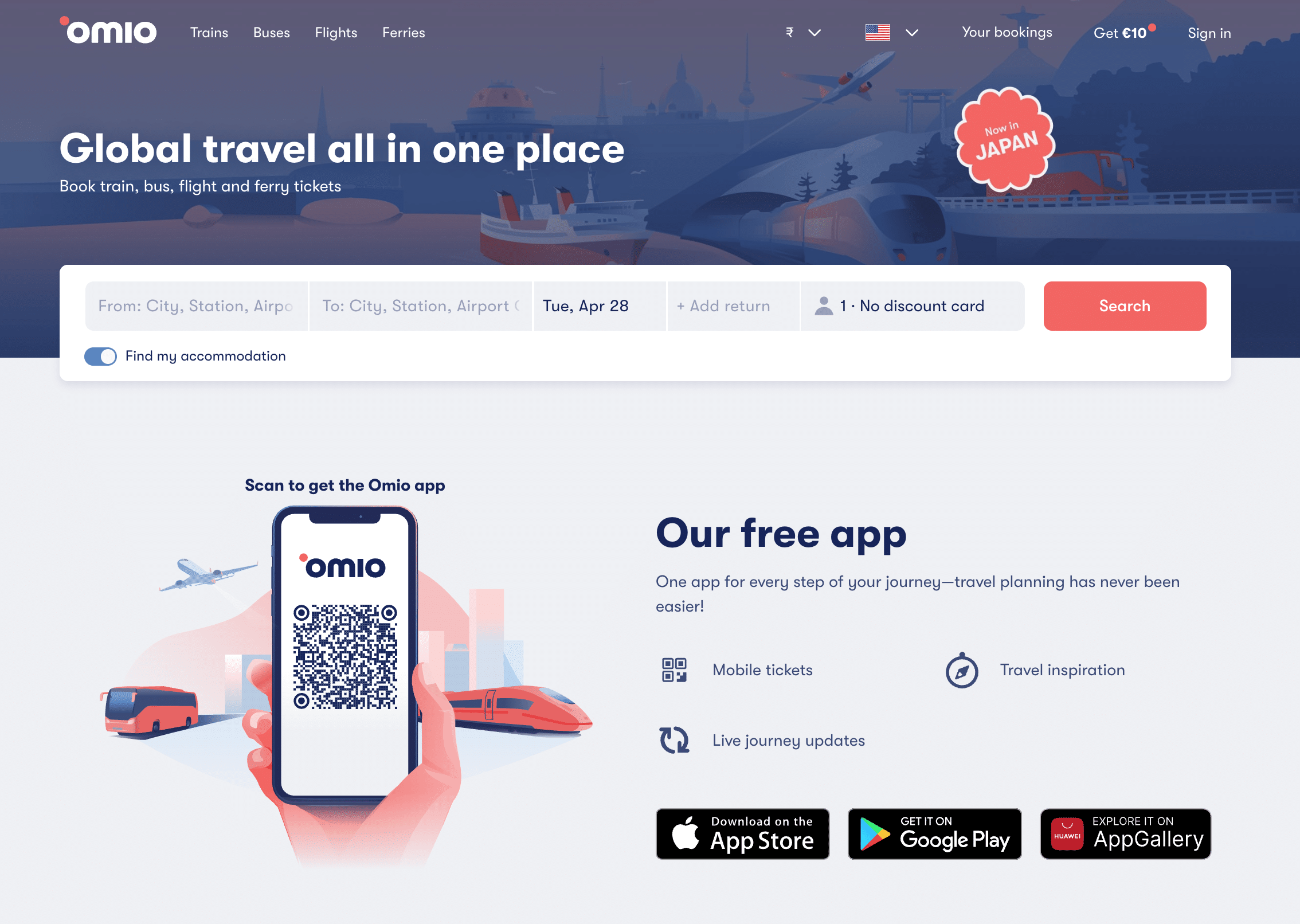
Omio is a travel booking platform that lets users compare and book train, bus, flight, and ferry tickets in one app. Omio says it works with 2000 plus travel providers and supports travel across Europe, the US, Japan, and other regions.
The main idea behind Omio is simple. Instead of checking a train site, bus site, airline site, and ferry site separately, you can compare them together.
For example, if you search London to Paris, Omio may show train, bus, and flight options. If you search Rome to Florence, it may show train and bus choices. If you search a coastal route, ferry options may also appear.
This makes Omio useful for travelers who care about convenience and flexibility.
What Is Trainline?
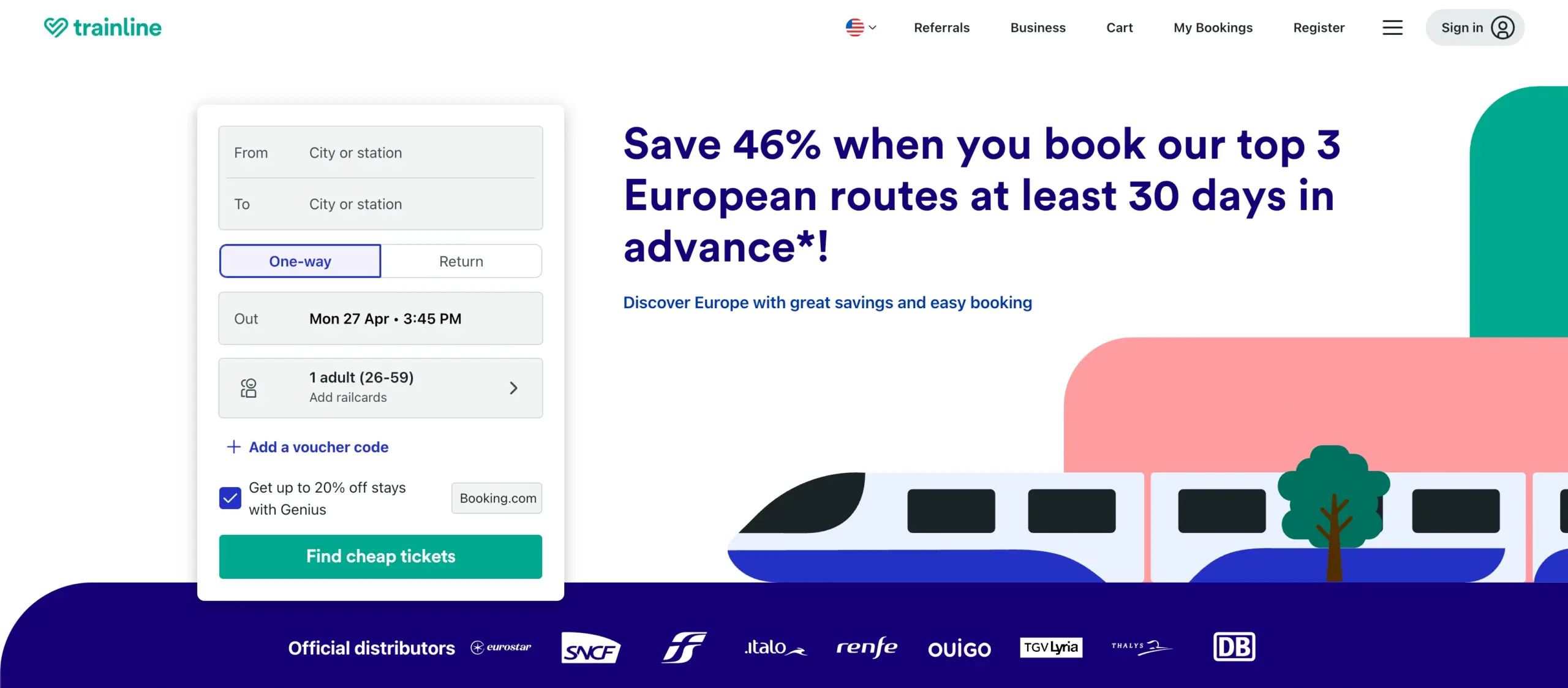
Trainline is a train and coach booking platform. It is especially popular in the UK and Europe. The app helps users search, compare, and book train tickets from many operators.
Trainline is not as broad as Omio because it does not focus on flights or ferries. But that narrower focus is also its strength. Trainline is built around rail travel, so it often feels more useful for people who travel by train regularly.
It supports mobile tickets, digital railcards, journey alerts, and UK rail focused features. For regular train users, that matters.
Omio vs Trainline Pricing: Which One Is Cheaper?
Neither Omio nor Trainline works like a subscription product. You do not pay a monthly fee to use either app. Both apps are free to download.
The real cost comes from:
| Cost Type | Omio | Trainline |
| App download | Free | Free |
| Account creation | Free | Free |
| Ticket price | Depends on provider, route, date, fare type | Depends on operator, route, date, fare type |
| Booking fee | May apply | May apply |
| Refund fee | Depends on fare and provider | Depends on ticket type and provider |
| Service fee | May apply | Booking fee may apply |
| Currency fee | May apply through payment provider | May apply through payment provider |
Omio states that it may charge service fees and booking rates. These vary by booking and are shown before payment. Omio also says service fees are non refundable.
Trainline also says it may charge a booking fee depending on the journey, ticket price, booking time, website or app channel, and other factors. Trainline says booking fees are not refundable.
So, which one is cheaper?
There is no single answer. Sometimes Omio is cheaper. Sometimes Trainline is cheaper. Sometimes the official train operator is cheaper than both.
The smart move is simple: compare the final checkout price, not just the first price shown.
Pricing Table: Omio vs Trainline Fees
| Pricing Area | Omio | Trainline |
| Download cost | Free | Free |
| Subscription | No required subscription | No required subscription |
| Ticket price | Set by travel provider and availability | Set by train or coach operator and availability |
| Booking fee | Can apply | Can apply |
| Service fee | Can apply | Usually shown as booking fee |
| Refund of booking fee | Service fees are non refundable | Booking fees are non refundable |
| Refund of ticket | Depends on ticket rules | Depends on ticket rules |
| Best way to avoid overpaying | Compare final price with provider site | Compare final price with provider site |
Feature Comparison: Omio vs Trainline
| Feature | Omio | Trainline |
| Train booking | Yes | Yes |
| Bus booking | Yes | Yes |
| Flight booking | Yes | No |
| Ferry booking | Yes | No |
| Mobile tickets | Yes | Yes |
| Offline ticket access | Yes, where supported | Yes, where supported |
| Route comparison | Strong across transport types | Strong for trains |
| UK railcards | Limited compared with Trainline | Strong |
| Split ticketing | Not a main feature | Stronger for UK rail |
| International travel | Strong | Strong for rail |
| Best price tools | Route and provider comparison | Rail focused fare tools |
| App simplicity | Very beginner friendly | Very strong for train users |
| Customer support | Help center and booking support | Help center and booking support |
Travel Coverage: Omio Wins for Variety
Omio covers more types of travel. It compares trains, buses, flights, and ferries. That gives it an advantage for users planning full trips across countries or cities.
Omio’s app page says users can explore 10 plus million train, bus, flight, and ferry tickets in one app, with mobile tickets and offline access where available.
Trainline is more focused. It is not trying to replace every travel booking app. It is mainly built for train and coach travel. This makes it more useful if you know you are taking the train, but less useful if you are deciding between a train, bus, and flight.
For example:
| Travel Scenario | Better App |
| London to Manchester by train | Trainline |
| Paris to Amsterdam by train or bus | Omio |
| Rome to Venice by train | Either |
| Madrid to Lisbon by bus or flight | Omio |
| UK commuter rail | Trainline |
| Europe backpacking trip | Omio |
| Ferry route search | Omio |
| UK railcard user | Trainline |
App Experience: Which App Is Easier to Use?
Both apps are easy to use, but they feel different.
Omio feels like a travel comparison app. You enter your route, select your date, and compare several travel types. The layout is useful when you are still deciding how to travel.
Trainline feels more like a train booking app. It gives you a cleaner experience if you already know you want rail travel. UK users may find Trainline more familiar because it is heavily built around UK rail behavior.
Omio App Experience
Omio is useful when your question is:
“Should I take the train, bus, flight, or ferry?”
That makes it better for tourists, backpackers, and multi city travelers.
Trainline App Experience
Trainline is useful when your question is:
“What is the best train ticket for this journey?”
That makes it better for commuters, railcard users, frequent train travelers, and UK based travelers.
Mobile Tickets: Both Are Good
Both Omio and Trainline support mobile tickets where the operator allows them.
Omio promotes mobile tickets as one of its key features. It says users can access tickets on their phone, including offline access in the app.
Trainline also supports digital tickets for many routes. For UK train travel, this is one of the reasons people use Trainline regularly. You can book, store, and show your ticket from the app.
Still, mobile ticket availability depends on the operator and route. Some providers may require a printed ticket, station collection, or different validation process.
Refunds and Cancellations: Read the Rules Before Booking
This is where many users get frustrated with both apps.
Omio and Trainline are booking platforms. They are not always the final transport operator. So refund rules often depend on the train company, bus operator, airline, or ferry company.
Omio says users can cancel tickets online through the “Your Bookings” page, but only if they purchased a refundable fare type or added Omio Flex. Omio shows the refund total, including cancellation fees, before the user confirms cancellation.
Trainline says UK flexible tickets such as Anytime, Off Peak, and Super Off Peak can be refunded online, but a small fee applies. For tickets bought on or after April 1, 2026, the refund request must be made before the ticket becomes valid for travel.
This means you should not assume a cheap ticket is flexible. Many cheap fares are non refundable or difficult to change.
Omio Refund Policy: Important Points
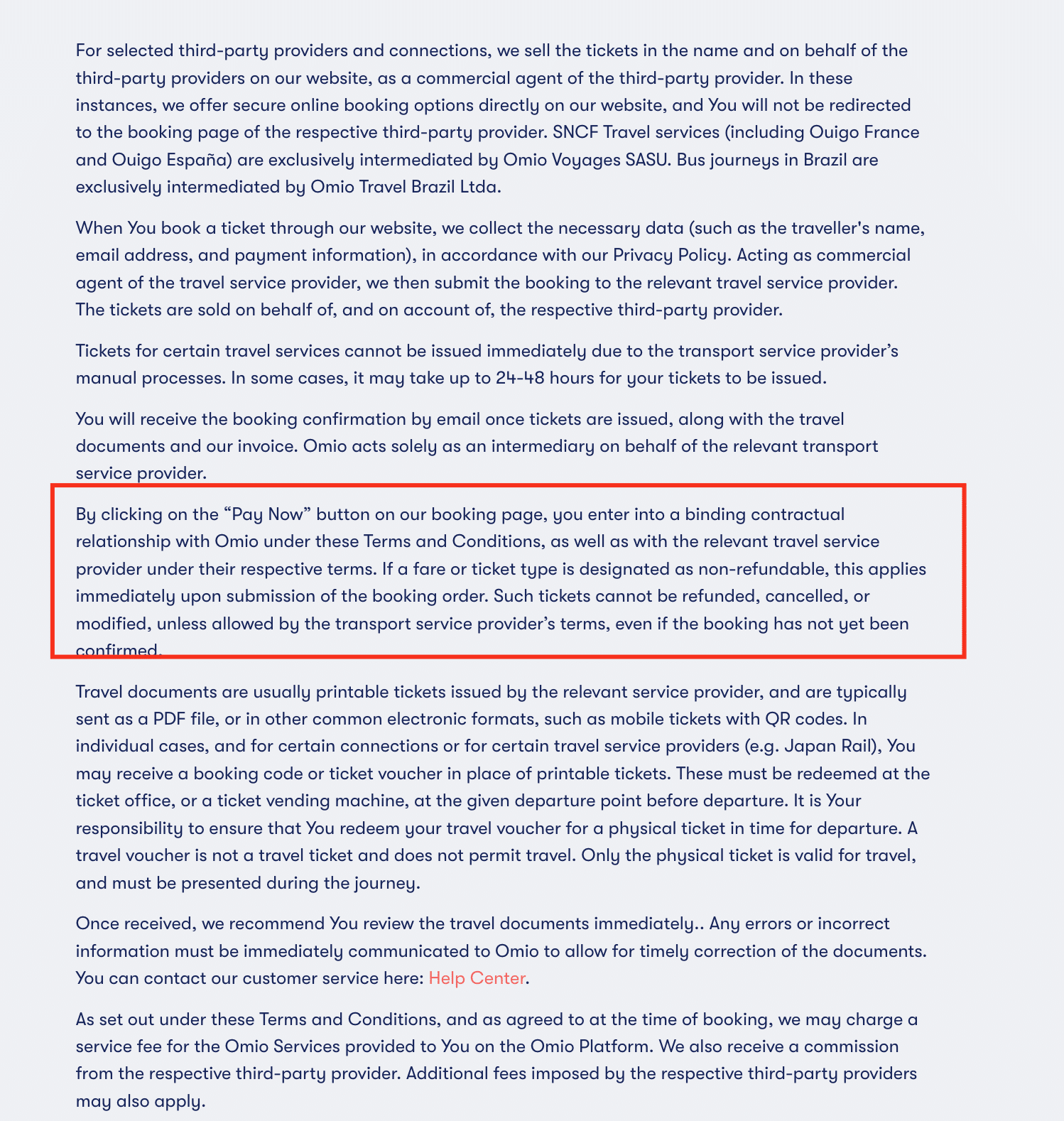
| Refund Area | Omio Policy |
| Refundable tickets | Can usually be cancelled online |
| Non refundable tickets | Usually cannot be refunded |
| Service fees | Non refundable |
| Booking rate | Refundable if the fare is refundable |
| Omio Flex | Allows cancellation for selected bookings |
| Final refund amount | Shown before cancellation |
Omio Flex can be helpful if available, but it is not free. The price is shown during booking. You should only add it if your plans may change.
Trainline Refund Policy: Important Points
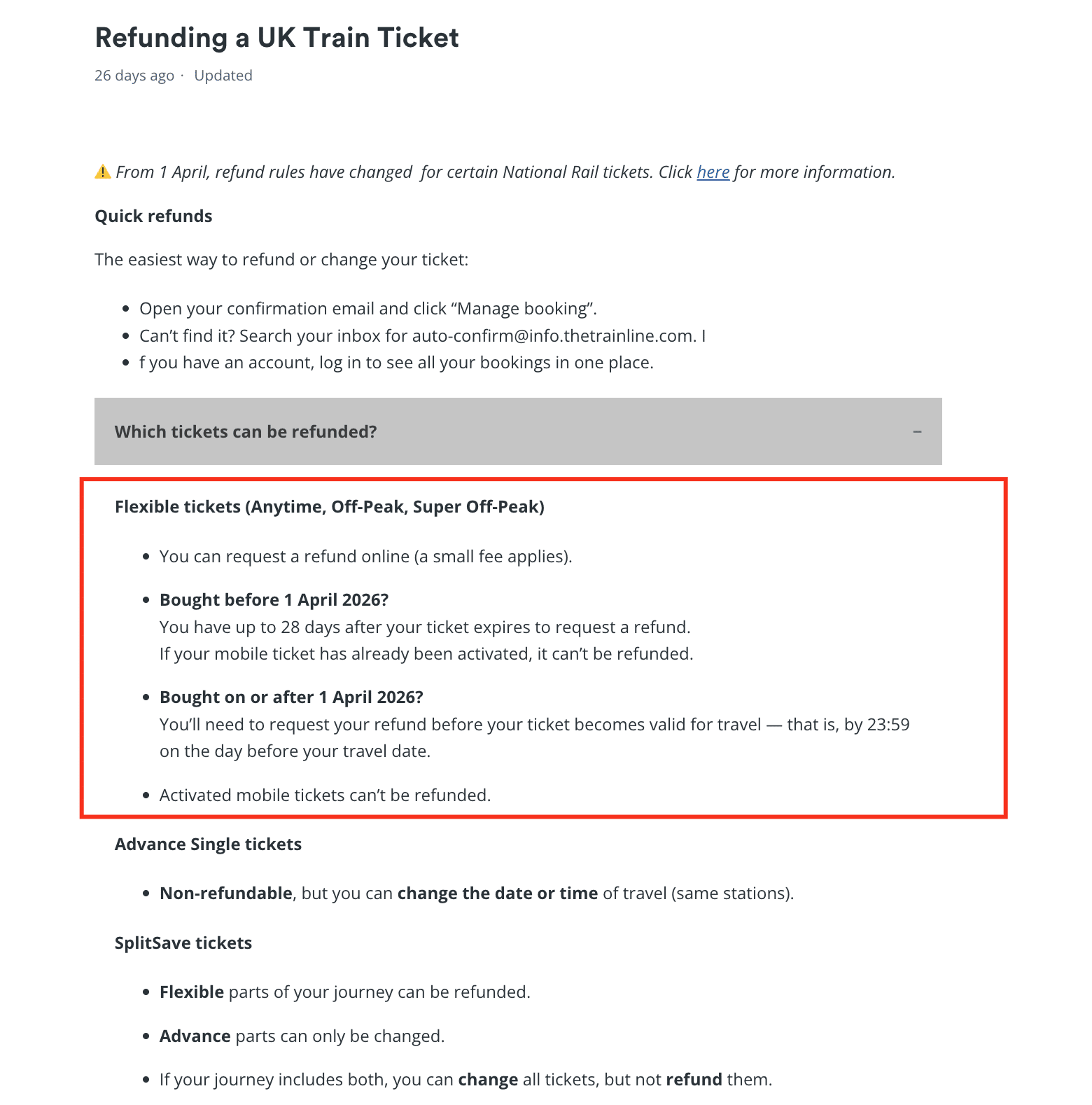
| Refund Area | Trainline Policy |
| Flexible UK train tickets | Usually refundable before validity starts |
| Advance tickets | Usually non refundable unless disruption rules apply |
| Booking fees | Non refundable |
| Refund fee | Can apply |
| Season ticket refund | £10 refund fee according to Trainline terms |
| Mobile ticket activated | May not be refundable |
Trainline states that it charges a £10 fee to refund all Season Tickets.
Omio vs Trainline for UK Travel
For UK rail travel, Trainline usually has the edge.
Trainline is deeply built around UK train behavior. It supports railcards, digital tickets, train alerts, and UK rail booking flows. Many UK travelers already know the app.
Omio can still be useful in the UK, especially if you want to compare a bus and train route together. But for pure UK train travel, Trainline feels more focused.
Best choice for UK travel: Trainline
Omio vs Trainline for Europe Travel
For Europe, the answer depends on the type of trip.
If you are only booking trains between major European cities, Trainline is very strong. It works well for rail focused trips.
But if you are comparing train, bus, flight, and ferry routes, Omio is more useful. Europe has many routes where the best option is not obvious. A flight may look fast but take longer after airport transfers. A bus may be much cheaper. A train may be the most comfortable.
Best choice for Europe travel: Omio for mixed travel, Trainline for rail only
Omio vs Trainline for Budget Travelers
Budget travelers should use both apps.
Omio is helpful because it compares buses, trains, and flights. This makes it easier to find the cheapest route across different transport types.
Trainline is helpful for train specific savings, especially in the UK. If you use railcards or split ticketing, Trainline can be useful.
Best choice for budget travelers: Use both and compare final checkout prices
Omio vs Trainline for Backpackers
Backpackers usually need flexibility. They may travel across several countries and choose between buses, trains, flights, and ferries depending on price.
That makes Omio a better fit.
A backpacker planning Paris, Amsterdam, Berlin, Prague, Vienna, and Budapest may find Omio more helpful because it shows more transport types in one search.
Best choice for backpackers: Omio
Omio vs Trainline for Business Travelers
Business travelers usually care about speed, reliability, easy tickets, and clear booking records.
If the trip is train focused, Trainline works very well. If the trip involves different transport types, Omio is better.
Best choice for business travelers: Trainline for trains, Omio for mixed travel
Omio Pros and Cons
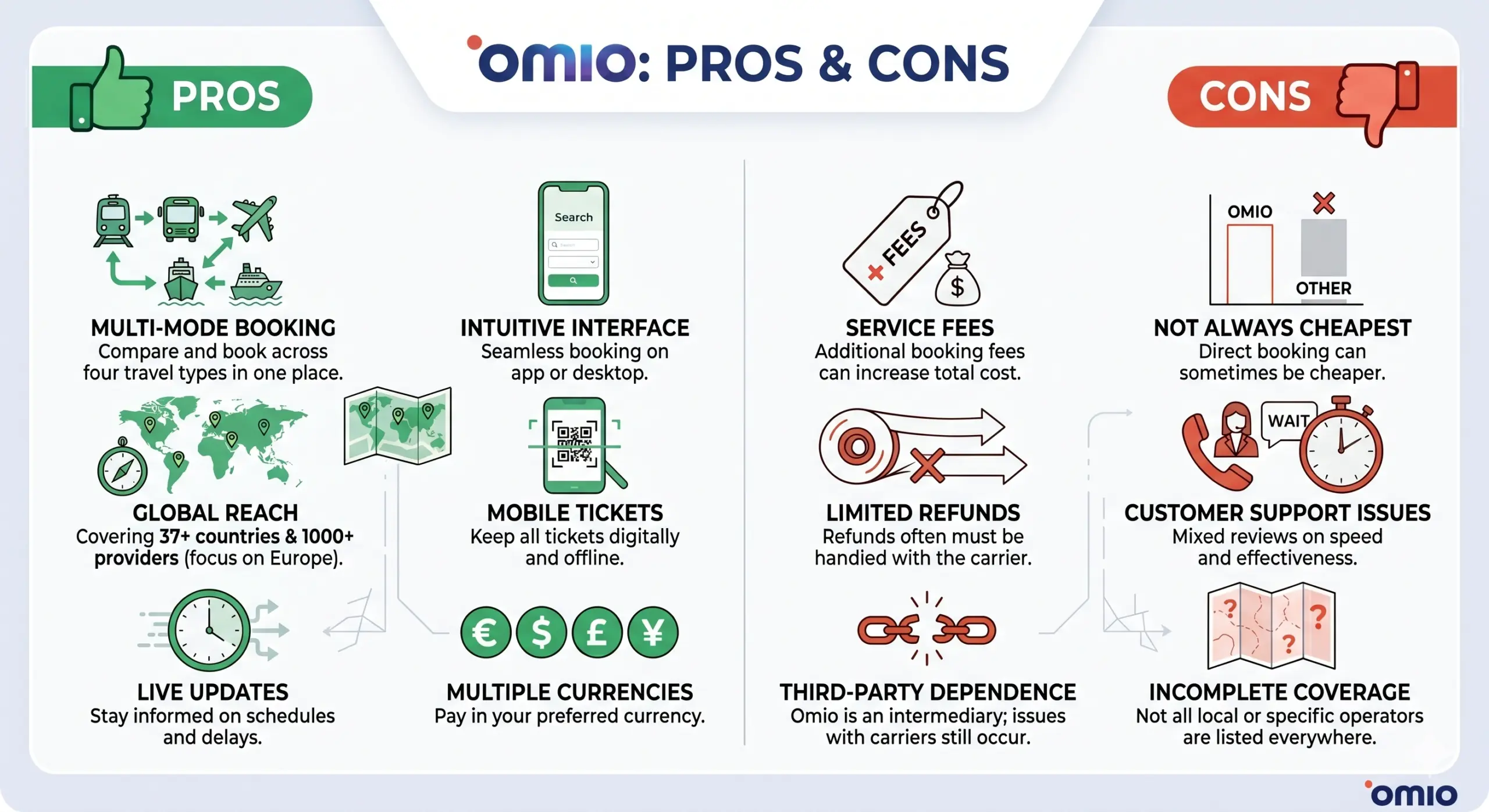
Omio Pros
Omio is excellent for comparing different travel types. You can quickly see whether train, bus, flight, or ferry makes the most sense.
It is also beginner friendly. The app is simple, clean, and useful for travelers who do not know local transport providers.
Omio is especially helpful for European trips because it brings many providers into one search. You can compare price, route, time, and transport type without jumping between websites.
Omio Cons
Omio can include service fees or booking rates. The final checkout price may be higher than the provider’s direct price.
Refunds can also be limited. If the operator’s fare is non refundable, Omio usually cannot change that.
Customer support may also feel slower during disruptions because Omio sits between you and the transport provider.
Trainline Pros and Cons
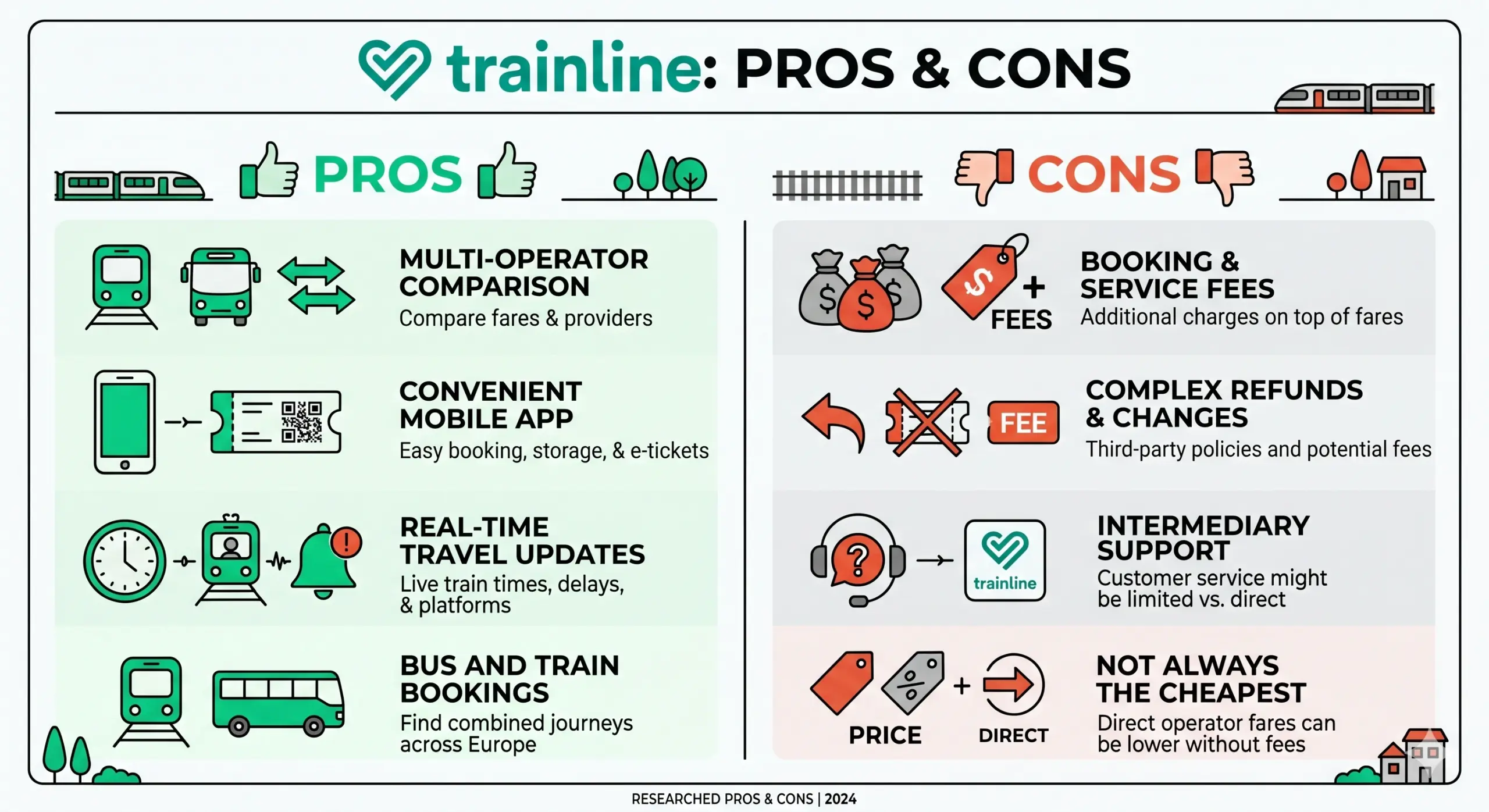
Trainline Pros
Trainline is strong for train booking, especially in the UK and Europe. It is built for people who travel by rail often.
The app supports mobile tickets, railcard features, journey updates, and train specific booking tools.
It can also be useful for finding cheaper UK train combinations, depending on route and availability.
Trainline Cons
Trainline is not as broad as Omio. It is not the right app if you want to compare flights and ferries.
Trainline may also charge booking fees, and those fees are not refundable. Like Omio, refunds depend on ticket type and operator rules.
Omio vs Trainline: Which Has Better Pricing Transparency?
Both platforms show the final price before payment, but both may charge extra fees.
Omio explains that service fees and booking rates can apply, and users are informed before paying.
Trainline explains that booking fees may apply depending on the journey, ticket price, booking time, and whether the booking is made on the app or website.
Neither app is always the cheapest. Both are convenience platforms. That convenience can be worth paying for, but only if the final price still makes sense.
Omio vs Trainline: Best Alternatives
| Alternative | Best For |
| Rome2Rio | Discovering route options |
| Google Flights | Flight comparison |
| Skyscanner | Cheap flights |
| FlixBus | Budget bus travel |
| National Rail | UK rail information |
| Direct train operator sites | Avoiding third party fees |
| Rail Europe | International rail bookings |
Who Should Use Omio?
Use Omio if you:
| You Want | Why Omio Works |
| One app for trains, buses, flights, and ferries | Omio covers more transport types |
| Europe route comparison | Good for cross border travel |
| Simple booking experience | Beginner friendly app |
| Multi city travel planning | Useful for comparing routes |
| Budget travel options | Shows cheaper buses and trains |
| Ferry bookings | Trainline does not focus on ferries |
Who Should Use Trainline?
Use Trainline if you:
| You Want | Why Trainline Works |
| UK train tickets | Strong UK rail focus |
| Europe train travel | Good rail coverage |
| Railcard support | Useful for UK savings |
| Train specific tools | Better for frequent rail users |
| Mobile train tickets | Simple app based ticketing |
| Commuter friendly features | Better than Omio for regular rail travel |
Final Verdict: Omio vs Trainline
Omio and Trainline are both useful, but they solve different problems.
Omio is better for travelers who want choice. It lets you compare trains, buses, flights, and ferries in one place. That makes it the better app for tourists, backpackers, international travelers, and anyone planning a multi city trip.
Trainline is better for travelers who mainly use trains. It is stronger for UK rail, European train booking, railcards, mobile train tickets, and train focused travel planning.
The most practical answer is this: use Omio when you are still deciding how to travel. Use Trainline when you already know you want the train.
For the best deal, check both apps and compare the final checkout price with the official provider website before booking. That small extra step can save money, especially when booking expensive or flexible tickets.